Aluminum Foundry is central to advanced aluminum casting applications
Wiki Article
The Duty of Aluminum Foundry in Enhancing Production Performance Throughout Diverse Sectors
Aluminum factories serve a crucial function in contemporary manufacturing by boosting production efficiency throughout different industries. They harness progressed strategies and sustainable techniques to enhance workflows and lessen waste. The impact of Aluminum reaches markets such as automotive, aerospace, and building, where its distinct residential properties enhance efficiency. The obstacles encountered by these factories could form their future. Aluminum Foundry. Comprehending these characteristics exposes an intricate landscape of innovation and adjustmentThe Significance of Aluminum in Modern Production
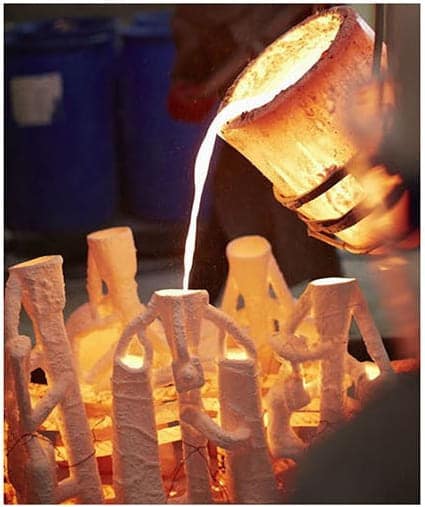
The flexibility of Aluminum allows a vast variety of construction strategies, including casting, extrusion, and machining. Additionally, its recyclability even more emphasizes its significance, as recycled Aluminum needs substantially much less energy to produce than new Aluminum, lining up with contemporary environmental objectives. As industries remain to advance, Aluminum's unique characteristics and flexibility ensure it remains an essential material for driving advancement and effectiveness in manufacturing procedures. Its payments expand beyond capability, supporting economic development and sustainability initiatives around the world.
Secret Processes in Aluminum Foundries
In Aluminum shops, several key processes are necessary for attaining high manufacturing performance. Melting and alloying methods, along with molding and spreading techniques, play an essential duty fit the end product. Additionally, carrying out rigorous quality assurance gauges guarantees that the result satisfies sector standards.Thawing and Alloying Techniques
Although melting and alloying are essential processes in Aluminum shops, their performance greatly influences general production high quality and expense. The melting process generally includes the usage of gas-fired systems or electrical furnaces, which enable precise temperature level control. This guarantees that Aluminum reaches its excellent melting factor, decreasing energy consumption. Alloying, on the various other hand, entails the enhancement of certain elements to accomplish preferred product residential properties, such as toughness and deterioration resistance. Techniques such as pre-alloying and in-situ alloying are frequently employed to enhance uniformity and reduce waste. Cautious surveillance throughout both melting and alloying stages is important, as it straight affects the material characteristics and assurances compliance with sector standards, ultimately leading to boosted production efficiency throughout numerous industries.Molding and Casting Techniques
A variety of molding and casting approaches are essential to the performance and quality of Aluminum shops. Amongst these approaches, sand spreading, pass away spreading, and permanent mold and mildew casting stick out due to their one-of-a-kind benefits. Sand spreading provides adaptability for intricate shapes and is affordable for low manufacturing volumes. Die spreading, recognized for its precision and repeatability, is optimal for high-volume manufacturing, giving exceptional surface area coatings and dimensional precision. Irreversible mold spreading integrates the advantages of both sand and die spreading, permitting far better mechanical homes and decreased material waste. Each method serves certain applications across diverse fields, allowing Aluminum shops to maximize production processes, minimize preparations, and satisfy varying consumer demands efficiently.Quality Control Actions
Guaranteeing top quality Aluminum products requires strenuous high quality control measures at every stage of the Foundry procedure. These procedures start with the selection of basic materials, where thorough testing for contaminations and structure is vital. Inspections throughout the molding and spreading phases check measurements and surface area quality to prevent issues as soon as products are approved. Advanced techniques, such as non-destructive testing, are employed to identify interior defects that may jeopardize item honesty. Additionally, procedure control systems continually check temperature level and alloy structure to maintain uniformity. Last assessments, including mechanical building testing, verify that the items fulfill market requirements. By executing these strict quality assurance procedures, Aluminum factories enhance production efficiency and ensure the integrity of their products across diverse fields.Technologies Driving Manufacturing Effectiveness
Innovations in Aluminum shops are changing manufacturing effectiveness through advanced spreading strategies and the combination of automation and robotics. These advancements not just streamline operations however additionally enhance precision and reduce waste. Furthermore, sustainable material developments are adding to more environmentally pleasant techniques within the market.Advanced Spreading Techniques
Countless sophisticated spreading methods are transforming the Aluminum Foundry sector, substantially improving manufacturing efficiency. Methods such as die casting, sand casting, and investment casting have advanced, allowing for increased precision and lowered waste. Technologies like computer-aided layout (CAD) and simulation software make it possible for shops to optimize mold design and anticipate prospective issues before manufacturing, decreasing expensive errors - Aluminum Foundry. Additionally, making use of alloy advancement techniques improves product homes, bring about products that satisfy strict efficiency requirements. Techniques such as quick prototyping and 3D printing are additionally obtaining grip, facilitating faster turn-around times for intricate geometries. These developments not just simplify manufacturing procedures but additionally add to sustainability efforts by minimizing power intake and improving product application in the Aluminum spreading industry
Automation and Robotics Integration
The combination of automation and robotics in the Aluminum Foundry industry is reinventing production performance. By employing advanced robotic systems for jobs such as molding, pouring, and finishing, factories are considerably decreasing labor expenses and lessening human mistake. Automated procedures streamline production lines, enabling faster turnaround times and consistent top quality in made elements. Additionally, the implementation of real-time tracking systems allows operators to track efficiency metrics and enhance process proactively. Robotics likewise enhances safety and security by taking control of hazardous jobs, thus minimizing workplace accidents. As the modern technology remains to progress, the Aluminum Foundry sector is poised to leverage these technologies additionally, guaranteeing competition and responsiveness in a progressively demanding market.
Lasting Material Innovations
As the Aluminum Foundry sector seeks to boost manufacturing effectiveness, sustainable material innovations are becoming a crucial element. These advancements consist of the growth of green alloys and making use of recycled Aluminum, substantially reducing the environmental effect of production procedures. Advanced techniques, such as additive manufacturing and eco-friendly casting techniques, allow shops to decrease waste while enhancing product buildings. Furthermore, the combination of bio-based binders and coatings leads to healthier functioning atmospheres and reduces exhausts. The fostering of life cycle assessment devices further aids factories in identifying sustainability possibilities, aligning with worldwide fads towards responsible production. Consequently, these developments not just boost manufacturing performance however likewise position the Aluminum Foundry sector as a leader in lasting industrial practices.Ecological Sustainability in Aluminum Casting
While Aluminum casting has actually long been a staple in production, its ecological impact has actually motivated a change towards more lasting techniques. Numerous factories are currently embracing environmentally friendly techniques to minimize waste and power intake. By utilizing recycled Aluminum, factories significantly lower the requirement for virgin products, thereby conserving all-natural sources and lowering greenhouse gas discharges.Advancements such as innovative melting technologies and improved heating system layouts furthermore boost energy effectiveness. Applying closed-loop systems permits for the recycling of scraps and results, lessening land fill payments. In addition, using water-based finishings and naturally degradable products in the casting process lowers dangerous discharges and environmental contaminants.
As industries significantly focus on sustainability, the Aluminum casting industry is straightening with these values, showing that financial growth and environmental responsibility can exist side-by-side. This dedication to lasting techniques not just benefits the setting yet likewise settings Aluminum foundries as leaders in accountable manufacturing.
Applications of Aluminum Parts in Different Industries
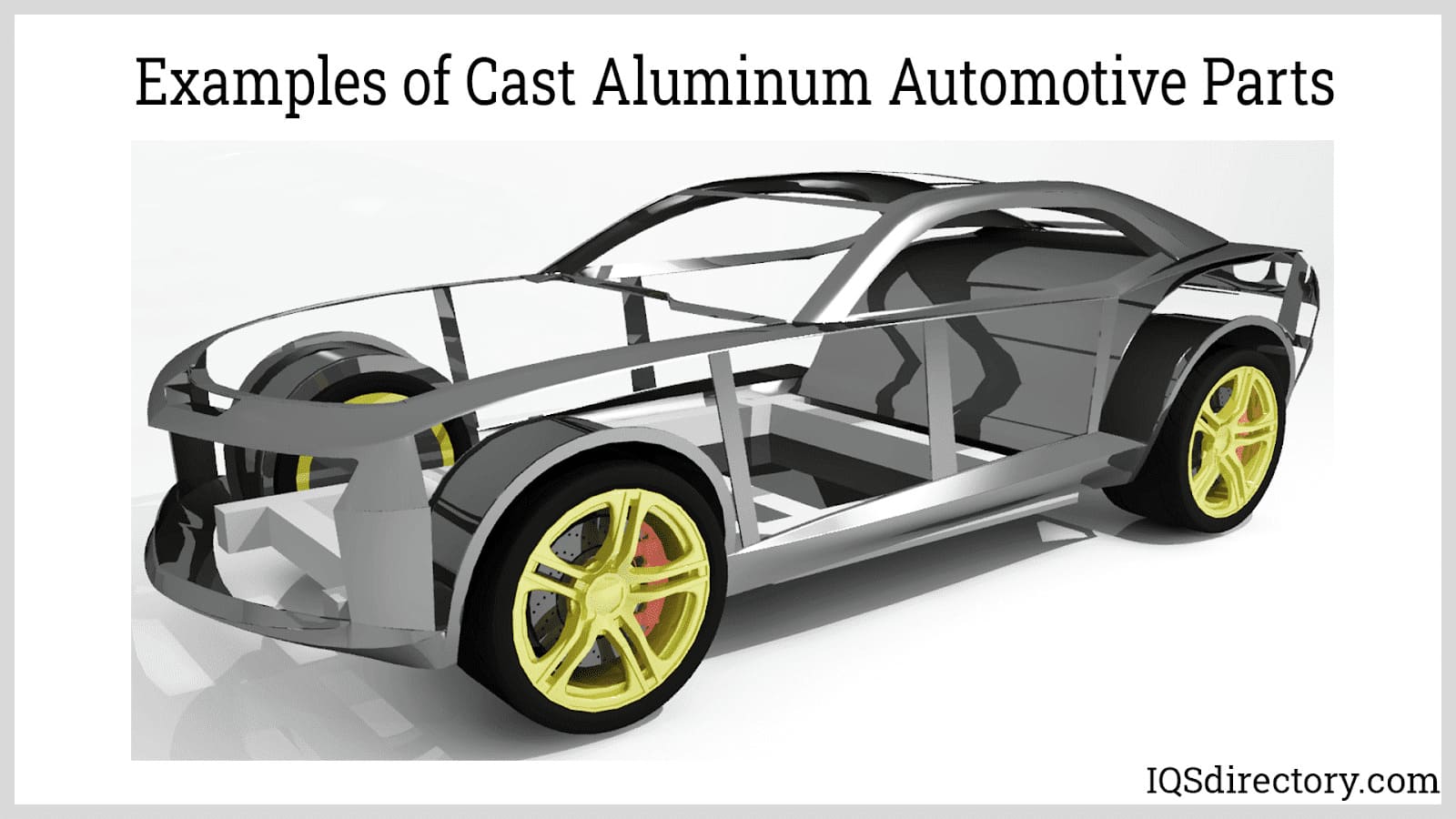
Aluminum components are increasingly used throughout numerous industries because of their special residential or commercial properties, that include lightweight strength, corrosion resistance, and excellent thermal conductivity. In the automotive industry, Aluminum is vital for generating lighter cars, adding to improved gas Aluminum Foundry efficiency and minimized exhausts. The aerospace sector leverages Aluminum alloys for airplane components, profiting from their high strength-to-weight proportion, which improves performance and safety and security.In building, Aluminum is preferred for windows, doors, and roof because of its sturdiness and visual allure. The electric sector utilizes Aluminum in power lines and components, making the most of its conductivity and resistance to corrosion. Furthermore, the durable goods industry makes use of Aluminum in packaging and family items, advertising sustainability via recyclability (Aluminum Foundry). Generally, Aluminum components play a crucial role ahead of time technological developments and functional efficiencies throughout diverse industries, highlighting their relevance in modern-day production and style
Obstacles Faced by Aluminum Foundries
Many obstacles confront Aluminum foundries, influencing their efficiency and productivity. One considerable concern is the volatility of raw product costs, which can vary unexpectedly, affecting operational costs and revenue margins. Furthermore, foundries usually come to grips with stringent environmental guidelines, calling for expensive investments in lasting techniques and waste monitoring systems. Labor shortages present one more hurdle, as the proficient workforce required for specialized processes becomes progressively scarce, leading to possible delays and quality assurance issues.In addition, technological integration presents difficulties; factories need to constantly adjust to advancements in automation and digital tools to remain affordable. Inefficiencies in manufacturing procedures, such as poor melting and spreading techniques, can likewise prevent outcome. The need for personalized options across numerous markets forces shops to balance adaptability with efficiency, making complex production schedules. Together, these difficulties produce a complex landscape that Aluminum foundries have to navigate to improve their total performance.
Future Fads in Aluminum Foundry Technology
As the Aluminum Foundry sector develops, arising innovations are set to change production processes and boost performance. Technologies in automation, such as robotics and fabricated intelligence, are anticipated to enhance operations, reduce labor expenses, and enhance accuracy. Furthermore, advancements in 3D printing modern technology will permit the quick prototyping of complicated Aluminum components, reducing lead times and material waste.In addition, the combination of IoT (Web of Things) will certainly enable real-time tracking of production processes, enabling for anticipating maintenance and reducing downtime. Sustainability will also play a crucial role, with an enhancing concentrate on recycling and power effectiveness in Foundry operations.
Frequently Asked Questions
What Are the Expenses Related To Aluminum Foundry Production?
The prices connected with Aluminum Foundry production include resources expenditures, labor costs, power intake, maintenance of equipment, and expenses. These variables jointly influence the general economic feasibility and performance of the Foundry operations.Just How Do Foundries Make Certain Quality Assurance in Aluminum Casting?
Shops guarantee high quality control in Aluminum casting via strenuous screening procedures, consisting of material evaluation, dimensional inspections, and process surveillance. Implementing standard procedures and using innovative innovations aids preserve consistency and satisfy industry specifications throughout manufacturing.What Precaution Are Executed in Aluminum Foundries?
Precaution in Aluminum foundries include personal protective tools, appropriate air flow systems, routine safety and security training, emergency situation methods, and tools maintenance. These practices aim to minimize threats, guaranteeing the wellness of employees and keeping operational efficiency.For how long Does the Aluminum Casting Refine Commonly Take?
The Aluminum casting procedure commonly takes numerous hours to several days, relying on elements like the intricacy of the style, the dimension of the actors, and the specific techniques utilized by the Foundry.What Skills Are Required to Operate In an Aluminum Foundry?
To operate in an Aluminum Foundry, people need abilities such as metallurgy expertise, machining proficiency, attention to information, analytic capabilities, and team effort. Safety and security awareness and technological know-how in casting processes are also important for reliable operation.Its recyclability better emphasizes its importance, as recycled Aluminum needs substantially much less energy to create than brand-new Aluminum, lining up with modern environmental objectives. A variety of molding and casting approaches are critical to the performance and top quality of Aluminum factories. Developments in Aluminum factories are revolutionizing production performance with sophisticated casting strategies and the assimilation of automation and robotics. Many innovative spreading strategies are changing the Aluminum Foundry industry, considerably boosting manufacturing efficiency. Foundries assure quality control in Aluminum spreading with rigorous testing protocols, including material analysis, dimensional evaluations, and process surveillance.
Report this wiki page